DISCOVER VILLANUEVA DE LOS INFANTES

English version of the web currently in development! Sorry for the inconvenience!

«Let it be called Villanueva de las Musas, and not Villanueva de los Infantes»… This is how Lope de Vega described our town. Villanueva de los Infantes is one of the most beautiful towns in Spain, as well as one of the best preserved historical-artistic sites of the Renaissance and Baroque in La Mancha. A monumental and literary city, the birthplace of Don Quixote and the last resting place of Francisco Quevedo. Delve into its nooks and crannies and let yourself be carried away on a unique journey to the artistic and cultural splendour of the Golden Age.

That village in La Mancha

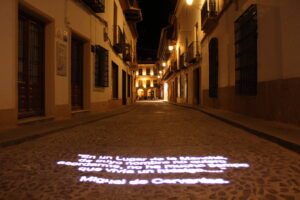
Villanueva de los Infantes es, según un estudio de la Universidad Complutense de Madrid, el Lugar de La Mancha del que Cervantes no quiso acordarse en El Quijote, aquel en el que situó el punto de partida de las aventuras de su ingenioso caballero. La huella de la hidalguía manchega que Cervantes inmortalizó en su universal obra sigue presente en las calles de Infantes, pasando por la Casa del Caballero del Verde Gabán, en la que el propio Cervantes también se inspiraría para retratar en su novela la morada de Don Diego de Miranda.

HEART OF THE GOLDEN AGE

Villanueva de los Infantes was one of the greatest exponents of the Renaissance and Baroque splendour of La Mancha, being the main cultural centre of the region during the Golden Age. From the House of Studies junior high school, which hosted the gatherings of the most notorious authors of the time, to the Convent of Santo Domingo where the writer Francisco de Quevedo spent his last days. Let yourself be surprised by the more literary side of Villanueva de los Infantes.

History carved in stone

In addition to its literary heritage from the Golden Age, Villanueva de los Infantes is also an important historical site representing the Baroque and Renaissance styles of La Mancha, which makes a walk through its streets a true journey back in time. Its urban layout is very symmetrical and offers numerous places of architectural interest. On the facades of its many palaces and manor houses, more than 250 coats of arms are preserved, which tell us the stories of the town's noblest families, as well as its humblest.

planifica tu viaje

QUÉ HACER EN INFANTES

Distinguished testimonials

“Let it be called Villanueva de las Musas (Village of the Muses), and not de los Infantes Villanueva (Village of the Infantes)”
LOPE DE VEGA, Laurel de Apolo

Photo: Fernando FRESNEDA (@PACHEWAN)

Haz clic aquí
“For some days I have been in a cell in the convent of Santo Domingo in this village. All the fathers of the house, who have shown me so much mercy and charity, are amazed at how much I suffer.”
FRANCISCO DE QUEVEDO, Letter to Francisco de Oviedo

Fotografía: FRANCISCO JOSÉ PACHECO

Haz clic aquí
“Misery spreads throughout Spain, Infantes is defeated, noble families are ruined; manor houses are closed; hidalgos and bureaucrats disappear.”
AZORÍN, LA EVOLUCIÓN DE UN PUEBLO, INFANTES

Fotografía: Mª José Valle

Haz clic aquí
“La Mancha and its women... Argamasilla, Infantes, Esquivias, Valdepeñas, Cervantes' fiancée, and of the heroic manchego, the housekeeper and the niece...”
ANTONIO MACHADO, LA MUJER MANCHEGA

Fotografía: Mª José Valle

Haz clic aquí
“In the unlit church, the howls of a village girl singing to the gods could be heard. I entered, overwhelmed. And there was Quevedo, alone, buried, perpetuating the injustice of his death…”
FEDERICO GARCÍA LORCA, INTERVIEW "LA VOZ" (1936)
Haz clic aquí
“I take the secret place and a luxury for the senses… strolling without haste… looking into the Church of San Andrés even if it is only to lovingly caress with my hand, drawing the outline with my fingers, the tiny angels and mermaids carved in stone of its plateresque pulpit”
Angela Vallvey, INTERVIEW IN "ELLE" (2006)
Haz clic aquí
“In a village in La Mancha called Villanueva de los Infantes, more or less three hundred kilometers southeast of Madrid, today a small town of more or less seven thousand inhabitants, there lived not long since one of those gentlemen that keep a lance in the lance-rack, an old buckler, a lean hack, and a greyhound for coursing.
Nicanor Parra, Cervantes Award acceptance speech (2011)

Fotografía: Mª José Valle

Haz clic aquí

VIDEO: FORGED BY NOBLEMEN